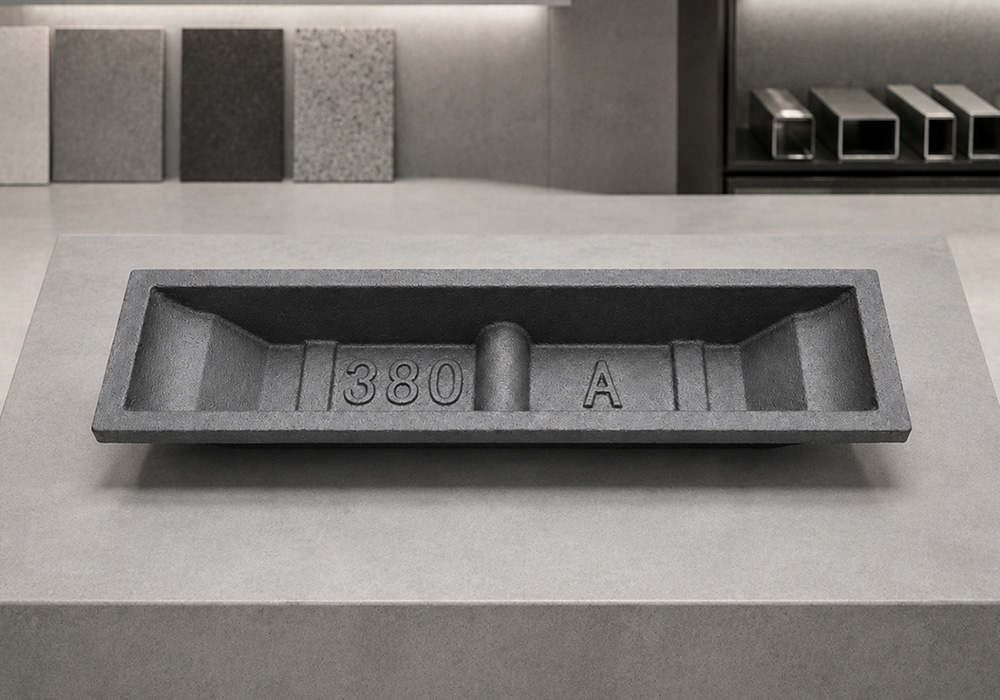
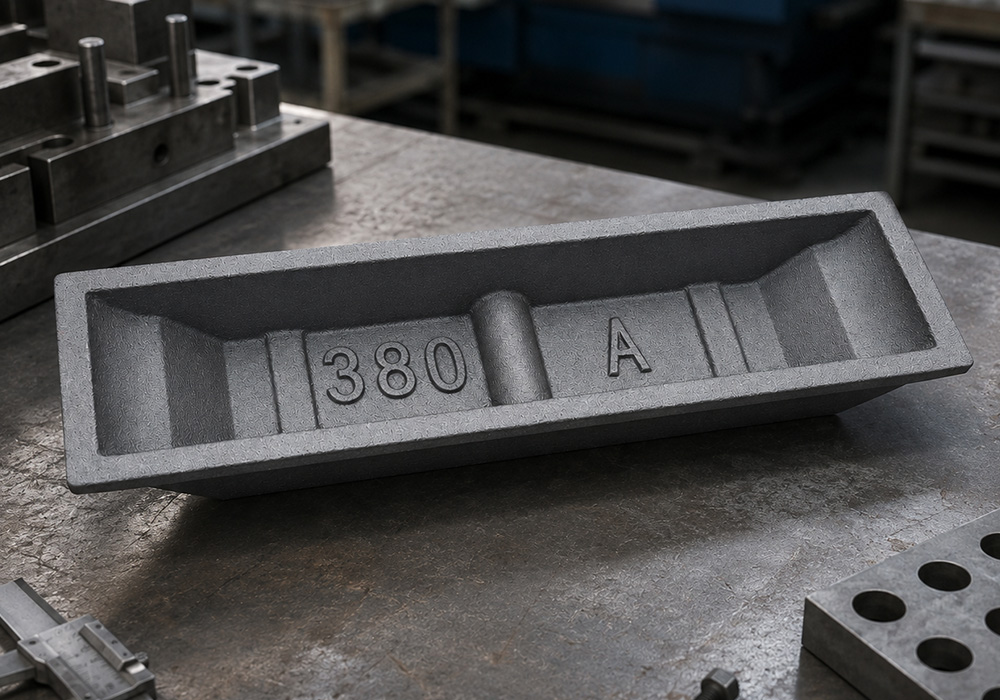
Zinc-aluminum alloy troughs (die-casting feeders/ingot troughs) are primarily used in zinc alloy furnaces to receive zinc-aluminum ingots and recycled materials. They withstand high-temperature immersion in molten zinc and repeated thermal shocks. Their lifespan depends mainly on the material, operating temperature, daily maintenance, and production load.
I. Typical Service Life of Different Materials
- Ordinary Cast Iron Troughs (Most Commonly Used)
- Continuous Production: 3-6 months;
- Intermittent Production with Reasonable Temperature Control: 6-10 months;
Failure Modes: Zinc corrosion produces an iron-zinc alloy layer, causing the trough wall to gradually thin, resulting in localized pitting corrosion. Severe cases may lead to leakage and cracking. Molten zinc reacts chemically with iron to form zinc slag, continuously eroding the trough.
- Heat-Resistant Cast Iron/Ductile Cast Iron Troughs (Thickened Version)
- Continuous Production: 6-10 months; Intermittent Use: Up to approximately 1 year;
Compared to ordinary cast iron, they offer better resistance to thermal fatigue and zinc corrosion, making them suitable for high-volume die-casting workshops.
- Ceramic-Coated/Anti-Corrosion-Coated Tanks
With a healthy coating, lifespan can be increased by 50%-100%;
- Continuous production can reach 8-12 months;
Note: Once the coating is scratched or peels off, the substrate will be rapidly corroded by the molten zinc, drastically reducing lifespan. Regular recoating and maintenance are required.
- Special Heat-Resistant Steel Tanks
Higher cost, continuous production lifespan 10-18 months, suitable for high-load, long-term uninterrupted production.
Industry Reference: If the factory operates 24 hours a day, ordinary cast iron tanks generally need to be replaced every 3-4 months; if operating on a two-shift, intermittent production basis, the lifespan will be significantly extended.
II. Key Factors Affecting Tank Lifespan
- Melting Temperature
The normal melting temperature for zinc alloys is 420-450℃; temperatures exceeding 460℃ will significantly accelerate the corrosion of the tank by the molten zinc, directly shortening the lifespan by more than half. - Thermal Shock: Frequent addition of high-temperature molten zinc to the cold bath followed by rapid cooling after shutdown can easily cause thermal cracks, accelerating bath damage. New baths must be fully preheated before use.
- Recycled Material Ratio: Excessive use of recycled materials such as sprues and flash, containing many impurities, exacerbates bath corrosion. A higher proportion of recycled material leads to faster bath wear.
- Slag Removal Operation: Frequent and forceful slag removal, with hard objects scraping the inner wall of the bath, can damage the surface protective layer, causing localized corrosion pits.
- Routine Maintenance: Regularly clean the zinc slag from the bottom of the bath to prevent long-term adhesion to the bath wall; regularly check the bath wall thickness. Replace the bath immediately when the wall is noticeably thinner, cracks appear, or corrosion pits develop.
III. Signals for Requiring Replacement of the Zinc Tank
- Obvious corrosion pits and thinning of the tank wall;
- Cracks and zinc molten metal leakage in the tank body;
- Severe zinc dross accumulation at the bottom of the tank, with large-scale corrosion remaining even after cleaning;
- Deformation and warping of the tank body.
Summary
- Ordinary cast iron zinc-aluminum troughs: 3-6 months for continuous production; 6-10 months for intermittent production;
- Thickened heat-resistant cast iron + coating maintenance: 8-12 months;
- Excessive temperature, excessive recycled material, and rough handling will significantly shorten the lifespan; proper temperature control, preheating, and regular cleaning of zinc dross can effectively extend the service life of the trough.